
Archive for The Guardian
maths as catchy background [and no further future for humanity]
Posted in Books, pictures, University life with tags AI, artificial intelligence, book reviews, dystopia, mathematical formula, neural networks and learning machines, Nick Bostrom, Philosophy of Science, poor maths, superintelligence, The Guardian, University of Oxford on May 11, 2024 by xi'an
mixed news on the Western [abortion] front
Posted in Books, Kids, Travel with tags abortion, abortion rights, AfD, anti-abortion organisations, Berlin, Brandenburg Gate, Bundestag, Catholic Church, CDU, Center for Reproductive Rights, Europe, far-right, French Constitution, Germany, Italy, Mike Pence, Nazi State, Newspeak, Poland, public health system, The Guardian, Together Against Trump, UNiTE to End Violence against Women, US politics, women's rights on May 6, 2024 by xi'an In the past weeks, a mix of negative and positive moves about abortion in Europe and the USA (which among other bans resuscitated a 1864 near-total abortion ban in Arizona and saw sad-faced Mike Pence complain in TNYT (!) about mad-hatter and opportunist Donald Trump “retreat from the pro-life cause”):
France has added that “The law determines the conditions by which is exercised the freedom of women to voluntarily terminate a pregnancy, which is guaranteed” to the Article 34 of the French Constitution, which is intended to make access to abortion a fundamental right but still remains a formal move as it can be reinterpreted restrictively (which conditions?!) and does not state anything about the practical side of universally ensuring this access, which might be severely hindered by a dearth of willing practicians or the introduction of constraints on clinics, as seen for many years in the US, prior to the revocation of Roe vs. Wade.
Poland has seen its MPs from its lower house vote on four bills on abortion for further study, of which two propose legalising abortion until the 12th week of pregnancy and cancel the current quasi-complete ban on abortion.
Germany Bundestag is working on a bill that would outlaw the intimidation of people around abortion clinics offering abortion. The country should however more much further by making abortion legal, which is not the case now (even though there are “exceptions for abortions with counseling in the first trimester, and for medically necessary abortions [incl. or serious social or emotional distress] and abortions due to unlawful sexual acts”) and actual access to abortion practitioners proves a challenge. The Christian Democratic Union (CDU) and the far-right Alternative für Deutschland (AfD) are unsurprisingly opposing this legalisation.
Italy saw Meloni’s far-right government allowing anti-abortion activists to enter abortion consultation clinics!!, as part of a package of measures funded by the EU!!!. with the [newspeak] argument that they “must not criminalise those who are against abortion. [The Government has] always allowed freedom of conscience on issues of this kind [and] believe it is right for everyone to behave according to their own beliefs and conscience.”

“the most intense famine since WW II”
Posted in Kids with tags 07 October 2023, ceasefire, famine, FAO, Gaza, Gaza war, humanitarian aid, international justice, IPC, Israel, Palestine, Stop the War, The Guardian, UNRWA, war crimes, WHO, WW II on April 12, 2024 by xi'an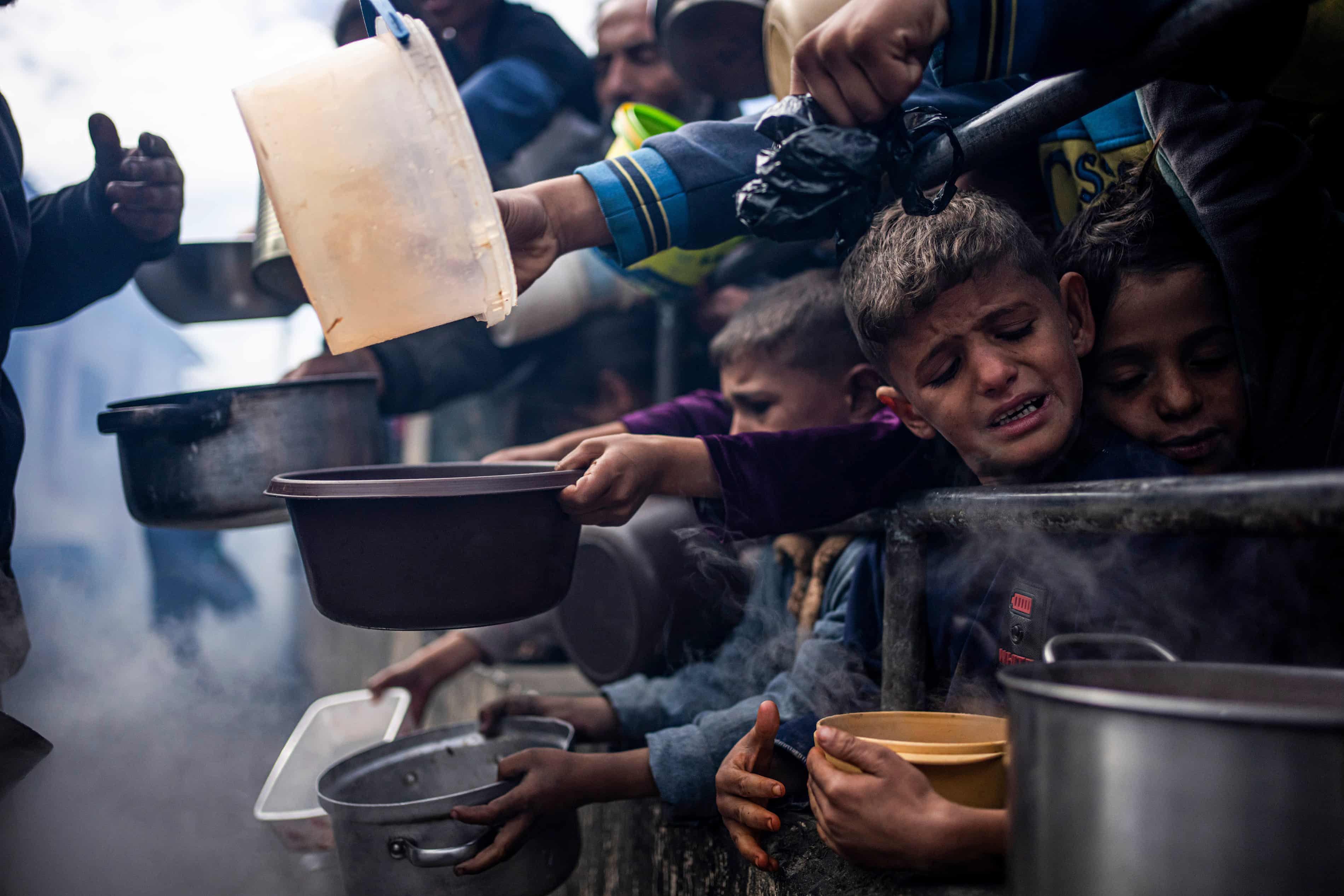 About 677,000 Gazaouis, are in “catastrophic” conditions today and a further 41% are in “emergency” conditions. Half of Gazaouis, i.e., 1.1 million people, will be in “catastrophe” or “famine” within weeks. Acute food insecurity puts all children under five at high risk of severe malnutrition and preventable death. (IPC)
Around 1.7 million people have been forced to flee their homes (UNRWA)
Projections for the likely death toll in Gaza from all causes (incl. epidemics) over the months to August 2024 produce a range of 48,210 to 193,180 deaths, under a “status quo” scenario (The Guardian)
Most Gazaoui households are skipping meals every day. In Northern Gaza, 33% of children under the age of two is considered acutely malnourished and two-thirds of households have gone entire days without food at least 10 times in the last month. (FAO)

Gazaouis have nowhere to go!
Posted in Kids with tags ceasefire, Doctors without Borders, Gaza, Gaza war, Israel, MSF, Palestine, Rafah, Stop the War, The Guardian, war crimes on February 17, 2024 by xi'an

gaming with abortion rights?!
Posted in Kids, pictures with tags abortion rights, anti-abortion organisations, Constitution, Emmanuel Macron, far-right, IVG, natalism, nationalism, Pétain, Roe v. Wade, Senate, The Guardian on February 11, 2024 by xi'an


 Xi'an's Og