 Researchers from ESSEC and ENSAE are organising a workshop at Institut Henri Poincaré, next June. This workshop will focus on exploring the latest advancements in Approximate Inference methods, with an emphasis on techniques such as Variational Inference and its related approaches. We aim to explore recent breakthroughs in computer science and statistics that enable inference across large-scale models and big datasets, surpassing conventional simulation-based methods. The workshop will bring together researchers from statistics, computer science, and econometrics to exchange ideas on cutting-edge methodological advances and their practical applications. Registration is open and program is available.
Archive for ENSAE
approximate inference in theory & practice, IHP, Paris, 10-11 June 2024
Posted in Statistics, University life with tags approximate inference, conference, ENSAE, ESSEC, IHP, Institut Henri Poincaré, Panthéon, simulation-based methods, variational inference, workshop on March 6, 2024 by xi'ansequential meetings in Edinburgh
Posted in Books, Kids, Mountains, pictures, Running, Statistics, Travel, University life with tags Arthur's Seat, Bayes Centre, COVID, CREST, Edinburgh, ENSAE, Holyrood Park, ICMS, international centre for mathematical sciences, Mike Titterington, pandemic, Scotland, sequential Monte Carlo, SMC, summer school, welcome to Scotland on October 24, 2023 by xi'an
There will be not one but two consecutive events in Edinburgh next May²⁴ on sequential Monte Carlo methods! Both hosted by the fantastic International Centre for Mathematical Sciences (ICMS) in Edinburgh Olde Town. Within the Bayes Centre. And running distance to Arthur’s Seat. (Reminding me of my first ICMS workshop in 2001 run with Mike Titterington. May have been my first week long visit to Edinburgh as well…)
First, a Summer School on Bayesian filtering: fundamental theory and numerical methods (SSBF 2024), Edinburgh (UK), May 6-10, 2024. This summer (in the Scottish sense!) school will cover topics related to fundamental theory, state-of-the-art methodologies, and real-world applications.
Second, a Sequential Monte Carlo workshop (SMC 2024), the week later, on May 13-17, 2024. The workshop will cover topics related to sequential Monte Carlo and nearby fields, from theory to applications, following earlier workshops in the series. Including the one at CREST in 2015.
Thanks to Víctor Elvira, Jana de Wiljes, and Dan Crisan for this double deal (and the opportunity to return to Scotland for the first time since the pandemic).
StatMathAppli, Fréjus, France [18-22 September 2023]
Posted in Statistics, Travel, University life with tags CIRM, ENSAE, Luminy, optimal transport, retrospective Monte Carlo, StatMathAppli 2023, University of Warwick on April 13, 2023 by xi'an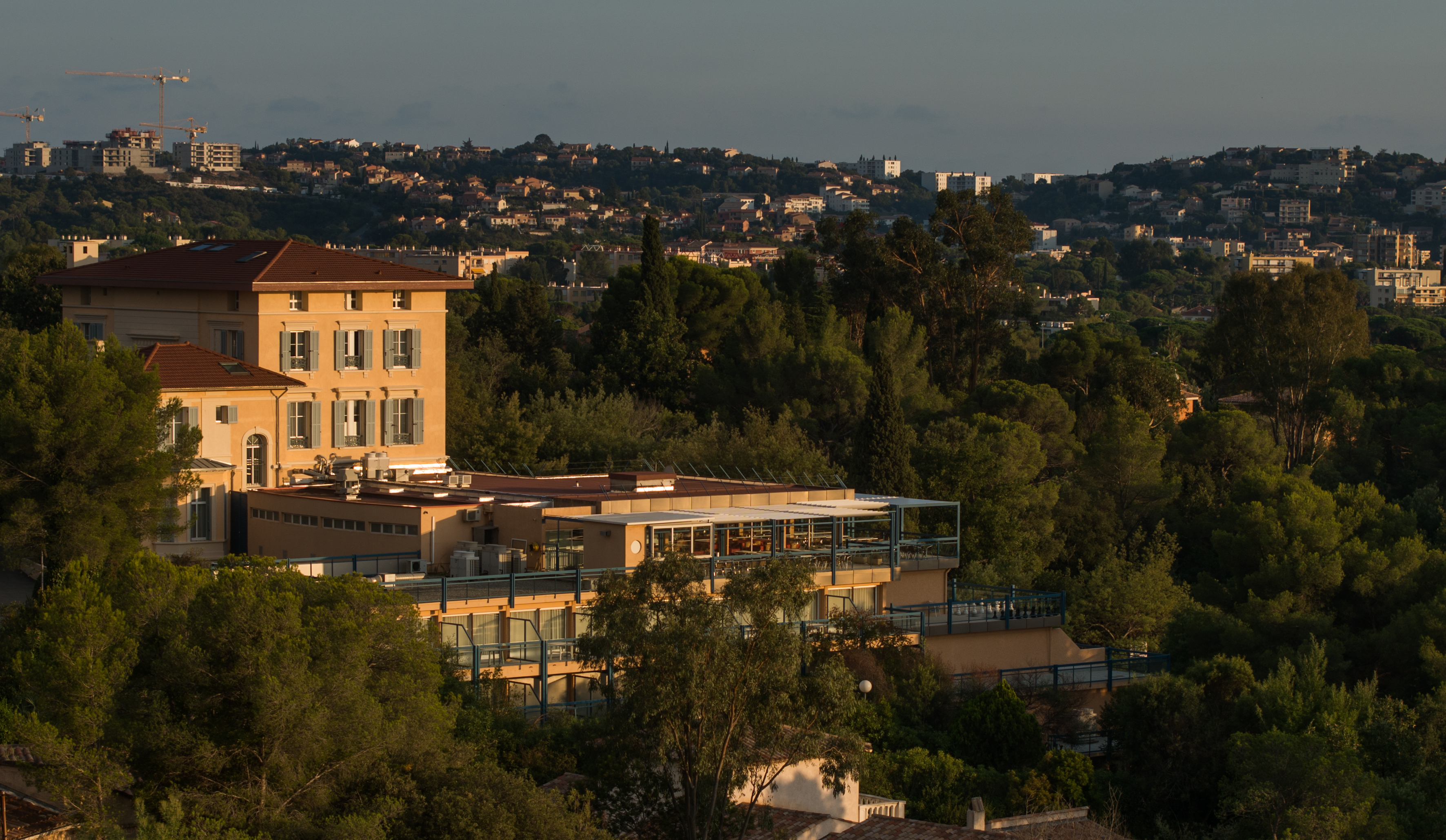 The bi-yearly StatMathAppli conference will take place next September in Fréjus, France, with guest lecturers Marco Cuturi (ENSAE & Apple ML Research) who will a lecture on “Optimal Transport: From Theory to Tweaks, Computations and Applications in Machine Learning”, and Gareth O. Roberts (University of Warwick) who will give a lecture on “Topics in Retrospective Simulation”. Registration is open and the number of places is limited. (I got invited to the 2002 edition of this workshop, which took place in CIRM, Luminy.)
library, whatzat???
Posted in Books, Kids, pictures, University life with tags banned books, ENSAE, Francis Bacon, library, Monte Carlo Statistical Methods, online book, students, Trinity College Dublin on December 19, 2022 by xi'an
to be demolished!
Posted in Books, pictures, University life with tags Adolphe Pinard, architecture, asbestos, boulevard périphérique, brutalism, CREST, ENSAE, INSEE, Le Monde, Malakoff on May 8, 2022 by xi'an


 Xi'an's Og